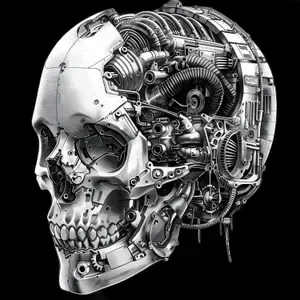
AI: More Than Just Retail and Politics
AI is transformative. It has the potential to reshape industries, expand human capability, and solve problems that have long resisted human ingenuity. It could revolutionize healthcare, accelerate scientific discovery, and create entirely new ways of working and learning. It could empower individuals and enhance governance. It could be the most important technological leap ever.
The printing press gave us mass literacy, political revolutions, and an explosion of human knowledge. If all it had achieved was making junk mail possible, we would consider that a colossal failure of imagination.
AI has the same duality. It can drive progress—but its most eye-catching commercial application is hyper-personalization: refining how people shop, scroll, and consume media. In this application, instead of broadening human decision-making, AI is being used to narrow it—to predict desires, personalize recommendations, and nudge people toward purchases they might not have considered.
AI Has To Follow the Money
This isn’t a grand conspiracy. It’s just how economics works. AI is expensive to develop, and companies need to monetize it. The fastest return on investment comes from the sectors with the most money and the best access to data: retail, banking, healthcare, media, and defense. These industries are setting AI’s priorities.
That means AI is advancing fastest in hyper-personalization and persuasion—not because they are the most valuable uses for society, but because they are the most profitable.
Hyper-Personalization: A Comfortable, Profitable Trap
Personalization is sold as a benefit—helping people find exactly what they want, when they want it. But in reality, it is an economic tool, not an empowerment tool. It works by making choices for people, reducing friction in transactions, and subtly steering decisions. The more predictable someone is, the easier they are to monetize.
This makes hyper-personalization incredibly effective. It keeps people engaged, increases spending, and refines consumer habits in ways they barely notice. But it also reinforces biases, fragments shared experience, and subtly limits exposure to anything outside a neatly curated digital world. The printing press allowed for the circulation of dangerous new ideas—AI risks creating a world where people see only what they are already inclined to believe.
This Industrial Revolution Cannot Be Defined by Consumption Alone
AI will continue to develop at extraordinary speed, but its trajectory is not yet fixed. The question is whether we will allow it to be defined primarily by retail and political manipulation, or whether we will insist on a broader, more balanced application—one that includes public good alongside profit.
There is nothing wrong with AI being commercially successful—it must be. But if its most significant early impact is perfecting targeted advertising and political messaging, then we will have made a choice without realizing it. AI could transform education, accelerate medical research, and improve governance. It could be a tool for exploration, creativity, and economic inclusion. But none of that will happen automatically.
If we want AI to be more than an engine for selling and persuasion, we need to engage now. Once its commercial incentives are set, changing direction will be far harder.