Intelligence Is Not Solely Human: A Pattern-Based View of Knowledge
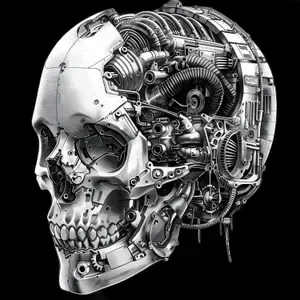
This is a work in progress — a concept to better describe and capture what human knowledge is, and how AI is now changing it for the better. At the core is a premise: humans are not truth seekers; they seek patterns. Knowledge, across every field, rests on our ability to detect, interpret, and generate them. In this context, AI — as a superior pattern recognition engine — is not an alien force but a continuation of this process, one that now accelerates and externalises our most basic cognitive function.
Wherever I look, I see patterns in the search for and application of knowledge. Rules are patterns made explicit. Expertise is the internalisation of many patterns. Creativity is the invention or recombination of patterns. Sensitivity and “soft skills” are the ability to detect subtle, unusual, or layered ones. Philosophy explores patterns at abstract or existential scales. Chaos, often, is not patternless — just beyond the reach of our current tools or frameworks. Ignorance, similarly, is not always a lack of pattern, but the presence of shallow or misleading ones.
Our senses, cognition, and lifespan are bounded. The illusion that they are not has produced much of our metaphysical architecture: religion, inflated notions of human control, and systems of thought that mistake scale for importance. A pattern-based view reframes the question of what it means to know, to understand, or to create. It places humans within the patterned structure of the universe — finite, contingent, and emergent — and not at the centre of meaning.
Reframing our capacities clarifies, and does not diminish, the human experience. We can make sense of our world through lived, recurring, interpretable structure, rather than divine truths or universal laws. Being pattern-seeking creatures explains not only what we can do, but what we do badly. For instance, we tend to overemphasise the moments when the patterns we detect appear to ‘work’ — when prediction and outcome align. We treat these instances as confirmation of certainty, rather than what they are: outcomes within a range of probabilities. In doing so, we misread chance as law, success as destiny, and meaning as proof. This distortion reinforces the illusion of control where there is only pattern fit, however temporary or contingent.
Seen this way, AI is entirely complementary. It is a natural amplification of the same pattern-seeking impulse. We have extended ourselves before — through writing, numbers, machines, and institutions. Societies themselves are pattern-based systems for managing complexity and distributing cognition. AI simply continues this trajectory, offering faster and more scalable tools for identifying structure in language, image, behaviour, and more.
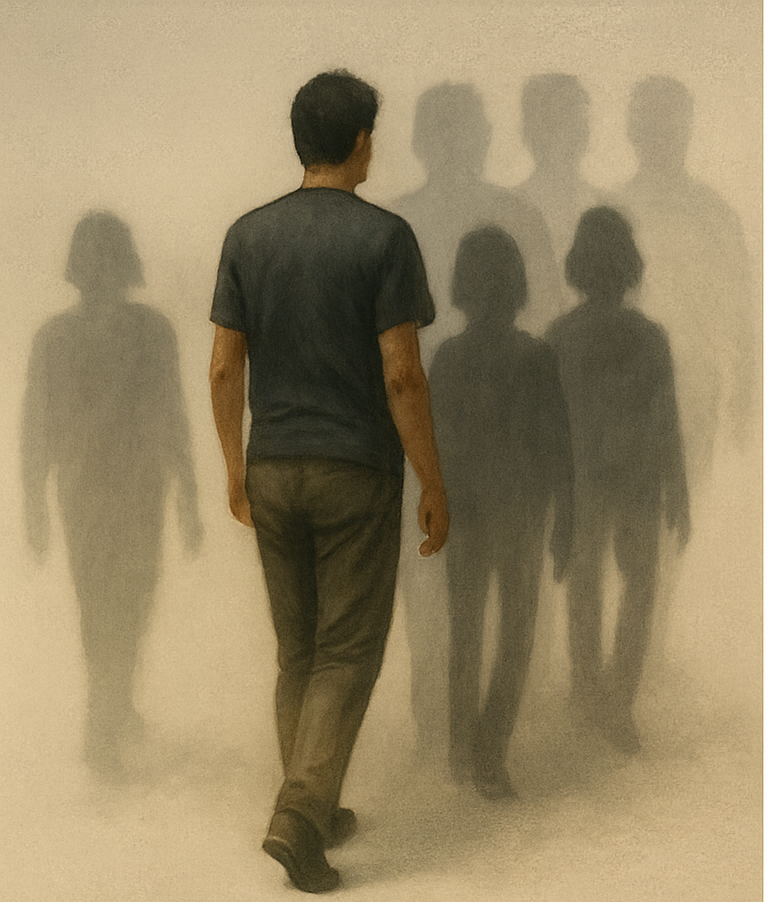
The shift breaks the illusion of human uniqueness, which has been our most defining belief, but it does so without erasing human value. Intelligence — as pattern detection and application — does not belong solely to humans, nor need it mirror human form to be real. AI already exhibits this capacity, and its integration into human systems is inevitable. The task is not to defend a central role, but to understand our changing one.
This concept rejects both the fantasy of control and the panic of replacement. It offers instead a grounded framework: patterns are what we seek, what we live within, and what we increasingly co-create with machines. There is no need for mysticism or moral panic. There is work to be done — in ethics, governance, and integration — but the direction is consistent. We are extending our reach, not abandoning it.