Online Metrics: Killing Competition and Choice
The Metric Illusion
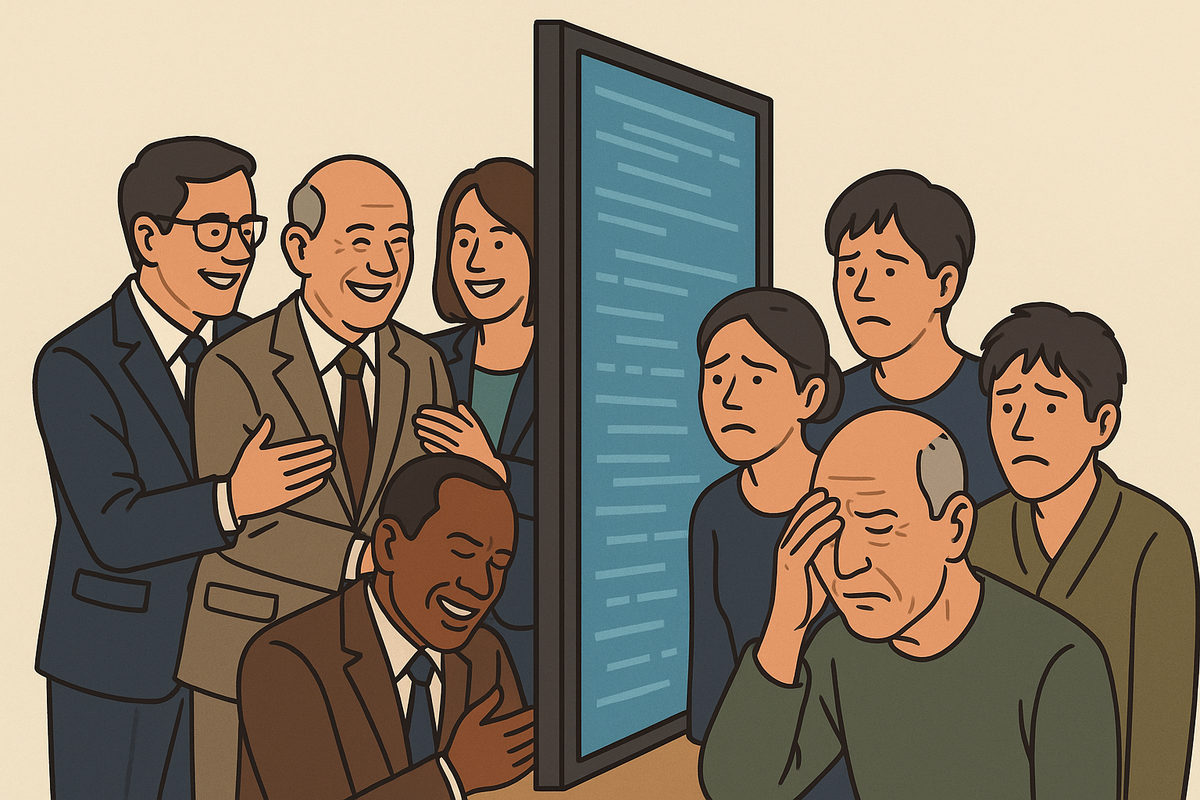
Across the online B2C economy, a decisive shift has taken place. Companies avoid real feedback on outcomes and instead measure activity: not fulfilment but capture - and with this shift competition and choice wither. Rather than leaning into serving customers better than the competition, companies measure self-indulgent activities in a closed system. Platforms now optimise for engagement, screen time, click-through rates, and “matches” that rarely translate into anything meaningful. They measure everything except whether the customer achieves the outcome they came for. Metrics are not the problem in themselves; except when they are detached from whether customers actually achieve the outcomes they were promised.
This is not a technical limitation. Platforms could measure satisfaction directly and refine their services accordingly. It was possible before AI, and now it is easier with fluent, engaging large language models that can interrogate and reach real depth in any exchange. Yet it is noticeable that platforms still choose not to engage honestly, with or without AI. They track or sell signals of captivity: repeated searches, longer sessions, higher interaction counts. These numbers do not indicate success; they indicate struggle. Yet they are interpreted as evidence of relevance. The businesses congratulate themselves while the user experience deteriorates.
Avoiding Real Feedback
This avoidance of real feedback is deliberate. Measuring satisfaction would expose the gap between the service promised and the service delivered. So feedback channels are narrowed and scripted. Users can complain about noise or frequency, but not failure. The result is a sealed environment where internal narratives are reinforced, and external reality ignored. If it is not measured, it does not exist.
A Closed-Loop Economy
What began with the largest platforms has spread across the entire online B2C landscape. Job boards, travel sites, real-estate portals, retail marketplaces, and countless smaller services now operate within the same logic: self-congratulation over usefulness, internal validation over customer outcomes. The problem is not only oligopoly; it is a systematic corruption of how online businesses define success. A two-person marketplace can now mimic the behaviour of the largest platforms, optimising for time-on-site and repeat visits while delivering the same thin, frustrating results that keep users searching but rarely satisfied.
This creates a closed loop in which platforms applaud themselves for movements that produce no value. Engagement is mistaken for achievement. Metrics designed to flatter are elevated above the lived experience of the people who rely on these services. Repeated user effort is treated as loyalty. The industry celebrates itself while its practical usefulness declines.
The consequences reach beyond irritation. A market remains healthy only when companies face external discipline: real choice, real feedback, real consequences for failure. Online B2C is walking away from that discipline. Users are treated as captive rather than served. Switching costs are engineered, not natural. Value is extracted, not created. And satisfaction is left unmeasured because acknowledging the truth would force change.
This situation is brittle. There is no guarantee of correction, only eventual failure. A sector built on extraction rather than service cannot sustain trust. It cannot correct its own failures because it refuses to acknowledge them. It cannot claim the benefits of competition while actively disabling the mechanism — meaningful choice — that makes competition work.
From Drift to Discipline
The message for business leaders is simple. The closed-loop comfort of flattering metrics is not strategy. It is drift. It weakens competitive position, erodes customer resilience, and builds businesses that cannot withstand scrutiny or substitution. Long-term strength comes from delivering outcomes, not from celebrating engagement.
Managers do not need to wait for regulation or public pressure. They can reintroduce the discipline themselves: measure whether customers succeed; design for clarity, not captivity; treat feedback as intelligence, not threat. Companies that place it fulfilment at the centre of their operations will endure. Those that hide behind metrics will not.
If online businesses want to celebrate themselves, let them. Customers deserve something else: the ability to choose services that work.