Public Truth Is Not the Point Anymore – Loyalty Is
Everyone is familiar with the sense that politics no longer follows a coherent line. Shifts in position, reversals, and outright contradictions are now the norm—and far from eroding support, they often seem to strengthen it. This isn’t the failing of one camp or ideology. It’s the shape of the entire landscape. Partisanship may colour the reaction, but the pattern itself is widely recognised.
What’s changed is not simply the volume of hypocrisy, but the disappearance of the guardrails that once kept it in check. Previously, public inconsistency triggered consequences: internal dissent, media scrutiny, parliamentary censure, or even resignation. Policy had to be explained. Decisions were debated. There were still boundaries—informal but real—between what could be politically justified and what could not.
Today those boundaries have shifted, even disappeared. Contradiction is absorbed, even anticipated, and certainly defended. The political cost of saying one thing and doing another has collapsed. Consider these now-familiar political paths:
- Government messaging relies on fake and exaggerated data, designed to impress rather than inform.
- A party campaigning on fiscal discipline enacts tax cuts and spending that balloon deficits.
- Democracy advocates become long-term incumbents, rewriting term limits and suppressing dissent.
- A populist denouncing elites embraces nepotism and monetises their office.
- A “law and order” candidate weaponises enforcement and captures the judiciary.
Politicians have realised that contradiction is not only survivable—in the right hands, it is usable. The tactic is no longer to justify inconsistency, but to manage narrative. Today’s political operators understand that coherence is not required—only performance that reinforces the emotional foundation of their base.
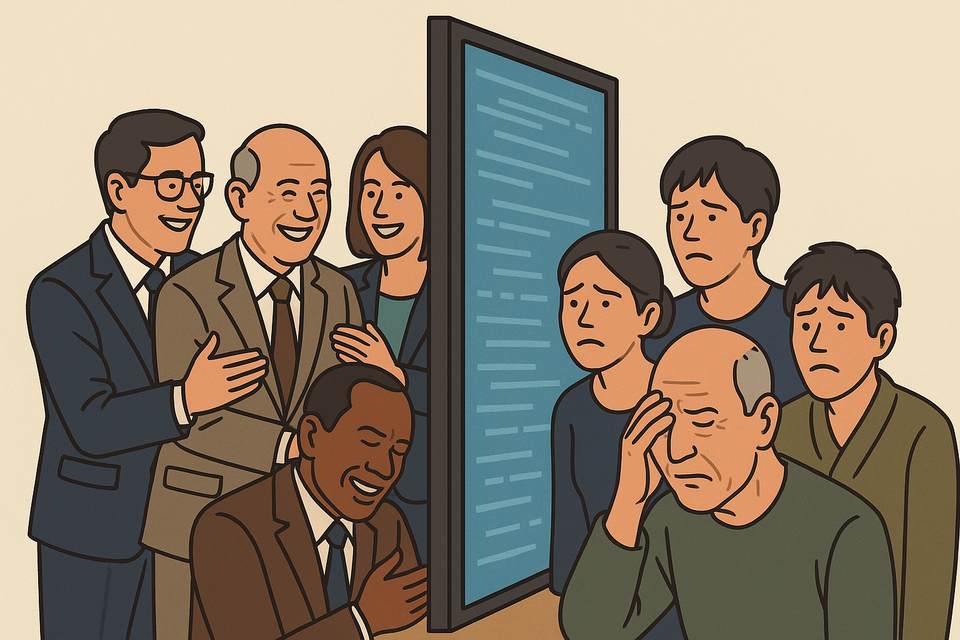
This is where cognitive dissonance enters—not as a psychological glitch, but as a strategic resource. Human beings resolve contradictions not by rejecting them, but by interpreting them in ways that preserve identity. Leaders have learned to manipulate this. They present dissonant positions not despite their inconsistency, but because it tests loyalty, deepens affiliation, and renders criticism inert. If followers accept contradiction, they have accepted submission.
Contradiction can be buried beneath drama—a reshuffle, a press conference, a scandal more urgent than the last. It can be sustained through fake facts: a stream of confidently presented falsehoods, misquotes, and cherry-picked data designed to overwhelm scrutiny and destabilise shared reality. This isn’t media failure—it’s a marketing strategy. It uses the tools of propaganda, not to address the public, but to rally the tribe. Internal doubt becomes betrayal; external critique, conspiracy.
Over time, this technique becomes central. Political authority detaches from coherence. Power is no longer exercised through policy, but through performance. Contradiction is not explained away—it is displayed, as proof that the leader answers to no one. The result is a politics no longer shaped by persuasion or accountability, but by spectacle and control. The lie is not hidden. It is placed in plain sight, and what is sought is not belief, but affirmation.