Red Turtle Review
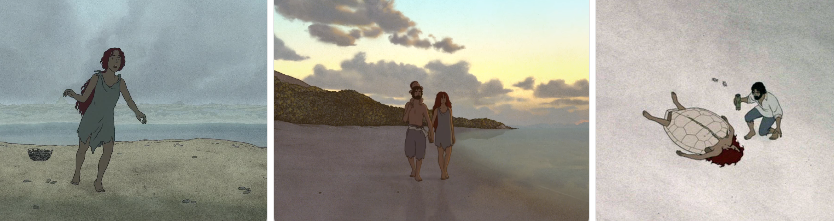
The Red Turtle, directed by Michaël Dudok de Wit and co-produced with Studio Ghibli, is visually pleasant and undemanding. The hand-drawn animation is precise. Sea, wind and sand are rendered with care. The absence of dialogue invites thoughtfulness. It is admirable craft.
The problem lies in the fable.
An aggressive castaway destroys what he cannot control. A red turtle intervenes. The turtle becomes a woman. From that point, the symbolism collapses under minimal scrutiny. The film implies that actions matter more than words, yet the woman, miraculously born from a dead animal, fully formed, clothed, fertile and conventionally European in appearance, is given almost no agency beyond companionship and motherhood. Her silence is aesthetic, not emancipatory. Life’s challenges appear reserved for the man.
The transformation also sits uneasily with its own modesty. The narrative is shy about nudity and sexuality, yet comfortable with the metamorphosis of an animal into a compliant partner. Mythologies across cultures manage similar crossings with greater imaginative coherence. The Celtic selkie tales, in which seal-women move between sea and shore, hinge on captivity, consent and return. Indonesian and Malay stories of Nyai Roro Kidul or other sea spirits grant the marine figure power, ambiguity and independent will. Even when troubling, these myths acknowledge reciprocity and loss. Here, by contrast, the woman exists only within the man’s very limited moral span.
The intended lesson—violence yields to harmony—feels thin against the contrivance required to deliver it. The animation endures. The moral architecture does not. A story that grants interiority to only half the species narrows its own claim to universality.