Data Is An Appreciating Asset: Why Facebook Will Always Pay the Fine
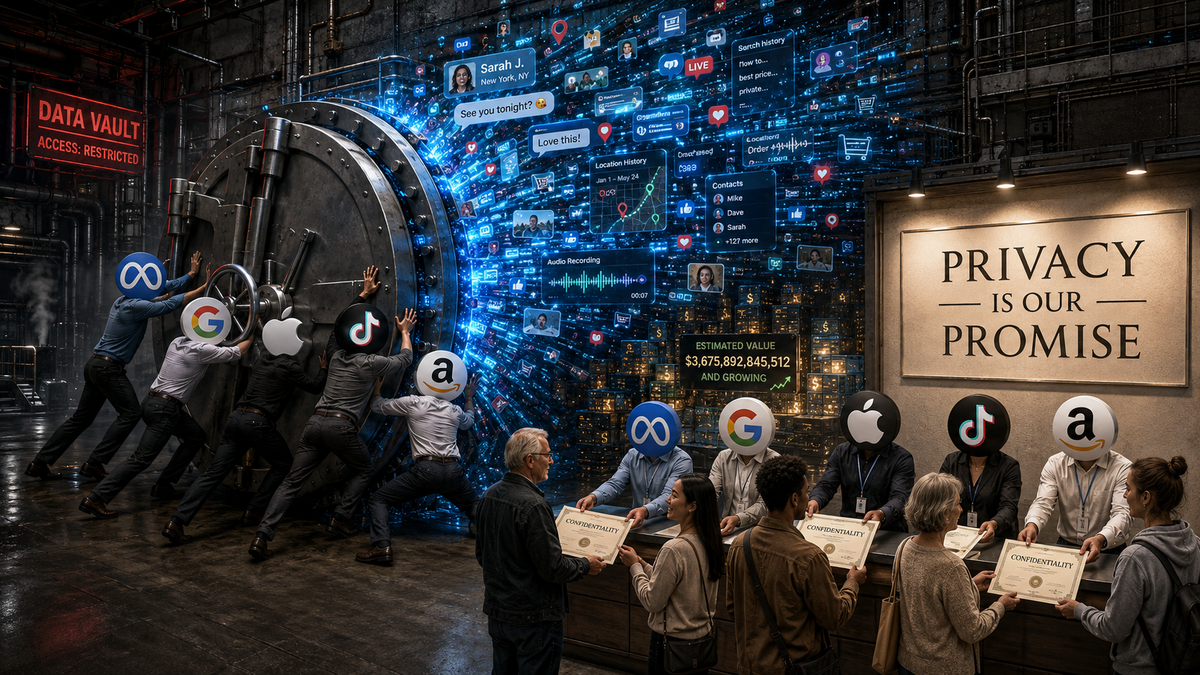
Our lives are accumulating commercial assets whose value rises as the technology for interpreting them improves. That value is largely invisible to us, unpriced, unshared, and increasingly concentrated in a handful of companies that collect the information, store it, interpret it, protect it and find ways to monetise it. We tend to discuss this as a problem of confidentiality. It is much bigger than that. We have created an extraordinary concentration of an appreciating asset and entrusted its protection to the same organisations with the greatest commercial incentive to discover what else can be extracted from it.
Stop thinking of “Big Data”. Think “Bigger Data”, which grows with every click. Now wrap your head around the fact that the value of what has already accumulated is increasing, so Bigger Data becomes “Bigger Richer Data”. In the future, better algorithms will return to your life's trail and discover patterns, preferences, relationships and predictions that could not previously be extracted. The archive does not merely get bigger - it becomes more valuable.
Your data? What do you think know about yourself? Until very recently most of the record of a human life simply disappeared: conversations evaporated, curiosities went unrecorded, friendships changed, interests came and went, private contradictions remained private. Now there is a machine-readable life story — not only what we consciously disclose but what can be inferred from the traces we leave behind. Its value is extraordinary and at the same time very difficult for an individual to perceive. For a start, no company will give you a value, still less a price. What they do offer you is the modern equivalent of beads and trinkets while you unknowingly hand over an autobiography of minute, recoverable detail.
This appreciating asset sits in the same very few companies — which accumulate the raw material, build the machinery that interprets it, combine it with other information, determine what can be inferred, safeguard the archive and then decide how value may be extracted from it. The mine, the miner, the refinery, the vault and the trader all sit in the same organisations. “Trust us” therefore carries an impossible burden: it asks the commercial company that benefits from discovering new value in the asset also to decide, indefinitely, where exploitation of that asset should stop.
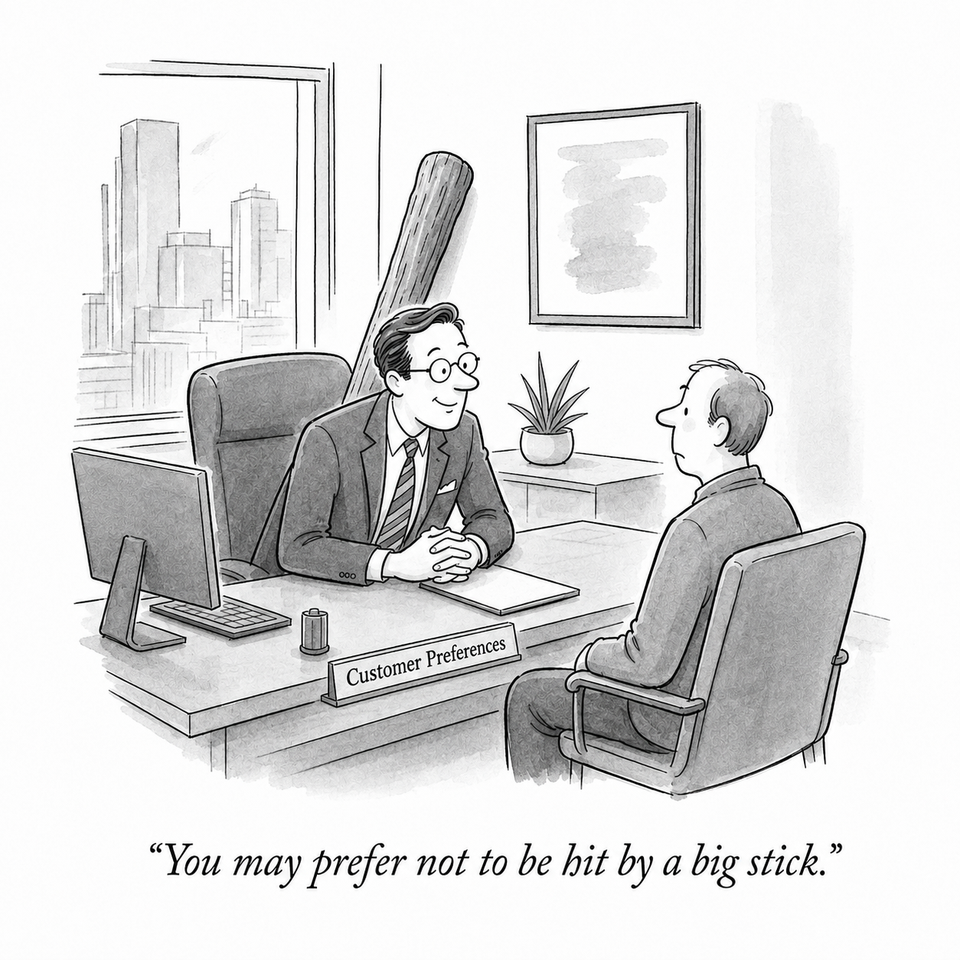
There is mounting evidence that this is too much to ask. Meta has just agreed to a proposed settlement of up to $17 billion with California over allegations including that Facebook and Instagram were designed in ways that drove compulsive use by children and teenagers, while users and families were misled about the risks. The point is not that Meta is uniquely malign. The episode is another reminder that large corporations respond to powerful commercial incentives in entirely predictable ways: act now, fight the rules, and pay the fines later. The greater the value available from engagement and data, the less plausible it becomes that voluntary restraint will consistently defeat the commercial incentive.
And those incentives are strengthening, not weakening. More of our lives are being recorded; more datasets can be connected; more can be inferred from them; and the technology for extracting value is improving extraordinarily quickly. Promises of confidentiality begin to look increasingly like the reassuring pats on the head of a much larger problem. What matters more is that underneath sits ownership, concentration and an appreciating asset whose eventual uses cannot even be known when much of it is collected. The companies will promise to protect your data, but they will not tell you what it is worth — still less offer you a price for it.
That structure cannot reasonably be expected to endure indefinitely on the strength of corporate restraint. Something that was once simply the private, disappearing record of a human life has become a resource of immense and growing economic value. If the organisations accumulating it are simultaneously its miners, refiners, custodians and traders, then some form of external protection of the public interest is not an attack on innovation. It is the increasingly obvious consequence of recognising what the asset has become.