Our “No” Is Their “Unoptimised Yes”
WhatsApp has found a new way to notify me after I turned notifications off. “You may have messages.” Not “you have a message”, nor even an occasionally useful administrative reminder. There is no claim that anything has happened, merely the possibility that something might have happened, which in a messaging application is permanently true.
It is difficult not to extend the logic. I may have an email. Someone may have left a voicemail. I may have messages on Signal. Perhaps WhatsApp could helpfully tell me: “You may have messages on one of our competitors’ apps. Please open them.” Someone might equally have emailed the boss: “This new approach may irritate our customers even more.”
All merely irritating were it not for the fact that I have long since turned notifications off. I prefer to open WhatsApp when I choose. The company provides a setting allowing me to express precisely that preference, and I used it.
The product strategy behind this did not descend from the cloud. Clever people sat in rooms, examined the problem, considered options and took decisions. They took disabled notifications as an instruction and turned it into a problem to be overcome. This particular “solution” was discussed, refined and approved.
“You may have messages” feels very much like spam to me. In this case it is not a third party flooding my inbox, but the platform itself. Platforms monetise access to users’ attention, ordinarily selling it to the highest bidders. Here even the paying third party has disappeared. The platform is manufacturing the interruption for itself, irrespective of the recipient’s stated preference.
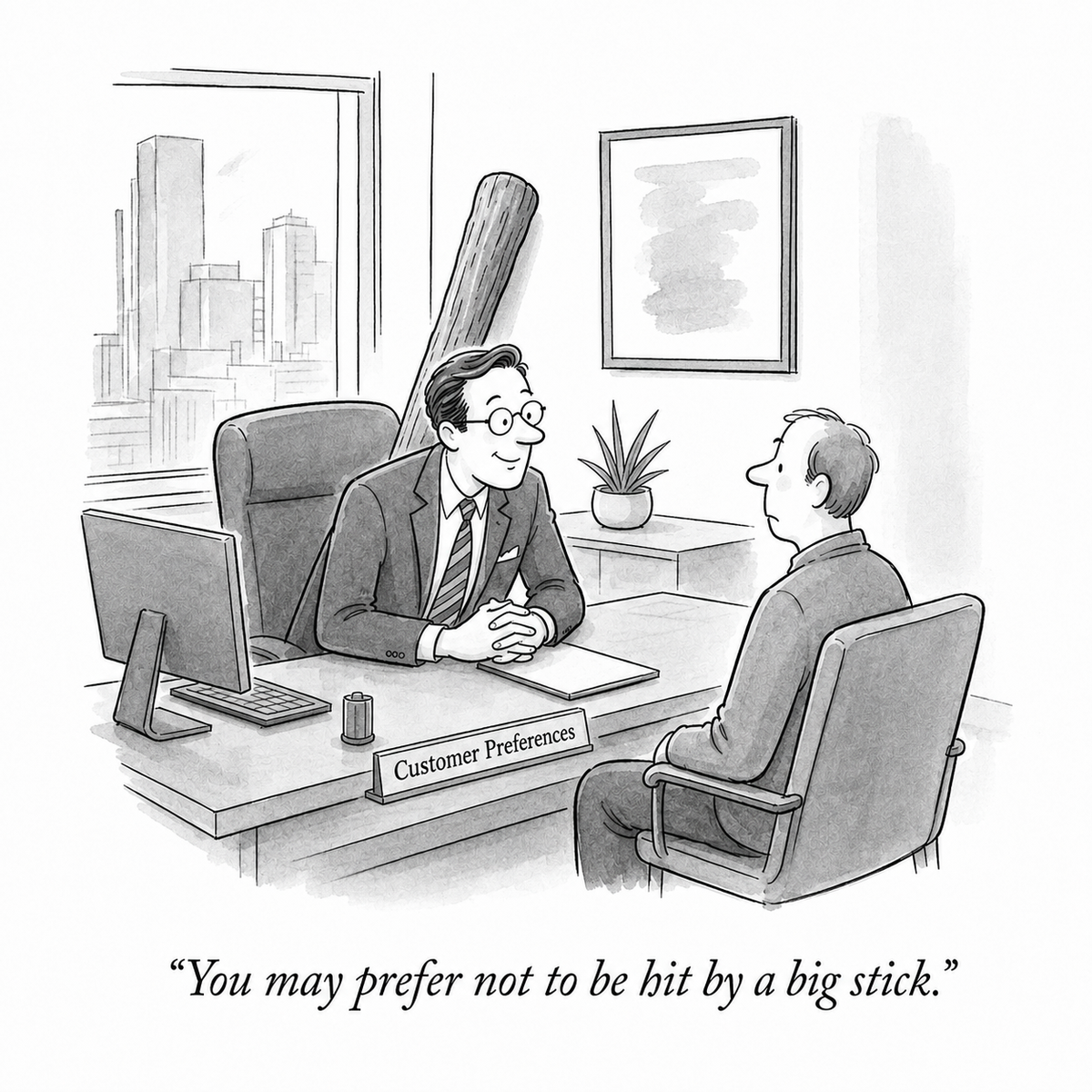
This starts to look less like persuasion and more like bullying: one side sets the terms and, when the other resists, finds another means of applying pressure. Companies already sell products containing hardware or software included in the purchase price, then charge again to activate it. The same logic applied to attention is simple: create the irritation, then sell restraint. “You may want to send us money regularly, or we may continue finding increasingly inventive ways to manipulate your attention.”
What I agree to is binding on me. What they promise lasts until it becomes the next obstacle.