Watamu Morality Play
A friend, still in place, sent me a message about another sad little drama on the Kenyan coast, though it will not feel little to the man inside it. The outline was familiar enough: an older, prosperous American arrives in Watamu, marries a much younger woman, puts the bank account, house and everything else in her name, and then finds himself divorced, expelled, dispossessed, and apparently the target of a clumsy attempt on his life during a “robbery”. He is now declaiming on social media about police, prosecutors, lawyers and embassies, as if noise and official channels will somehow recover what his judgement has lost.
My first reaction was the practical one. He is not only unlikely to get his possessions back; he may be making himself more vulnerable. Every institution he invokes can become another toll booth. The police, the DPP, the lawyers, the embassies, the intermediaries, and the people who offer to “know someone” may each become part of the machinery that extracts from him further. He may imagine escalation as pressure on the other side. It may instead be opening himself up to further disasters.
What struck me most was that he does not seem to understand the contest. He appears to think he is in a dispute: a bitter divorce, a betrayal, a financial wrong, perhaps even an attempted crime against him. In fact, the other side is probably professional, networked, experienced and practised in using stress as leverage. He may not be dealing with one angry ex-wife. He may be dealing with a local economy of pressure: relatives, police contacts, lawyers, fixers, accusations, threats, delay and humiliation. They have all seen this over decades. He is still behaving like a man with leverage, not appreciating that what is unique for him is a playbook for them.
The most dangerous mistake is to believe that “innocence” has any immediate practical meaning in his situation. The next escalation does not have to be even remotely true or even likely. It could be a false criminal accusation, perhaps involving the convenient younger cousin of the wife. Such a move could give the police a reason to arrest him, possibly violently, beat him, and put him in a Kenyan prison as an alleged child molester until he pays whatever is demanded to get out. I know of a case close enough to make this more than theory. The man paid and got out, but the experience broke him; he had a nervous breakdown.
That is what respectable, middle-class people often do not understand. The accusation does not need to be true to be effective. The process itself becomes the punishment and the leverage. By the time innocence is relevant, the victim may already have paid, collapsed, or both.
This is also where criminality and violence need to be separated. Criminality can still be imagined, almost reassuringly, as a battle of wits. Deception, manipulation, corruption, leverage, paperwork and contacts remain within a world educated outsiders can partly recognise. We can tell ourselves that it is a contest of intelligence, evidence, tactics and lawyers.
Violence is different. What non-violent people find almost unreal is that others can choose violence, inflict it, bear it themselves, and deploy it calmly as a skill. They can use threat, pain, fear and intimidation without the paralysing tension that even witnessing violence creates in many middle-class people. At that point the contest is no longer only about who is cleverer. It is about who can operate in a register that the other person can barely inhabit.
My own experience in Watamu, such as it was, taught me that in such situations the first discipline is to see my own mistakes clearly, accept them, and work out the least painful exit. The danger is not only the original error. It is the mantraps on the way out: the lawyers, police, fixers, accusations, pride, public noise and false hopes that can make things worse before they get better. The key is not to win theatrically. It is to stop the bleeding and emerge sane.
When it had passed, I could not stay longer in Watamu. I realised that the only real way to protect myself in the future would be to attach myself to someone powerful enough to stop things escalating. In practice, that meant paying for protection within the same system that made protection necessary. It was not just fear of something happening to me. It was the recognition that staying safe might require becoming someone’s client, and becoming part of the local economy of influence, intimidation and patronage. I did not want to live with that moral compromise.
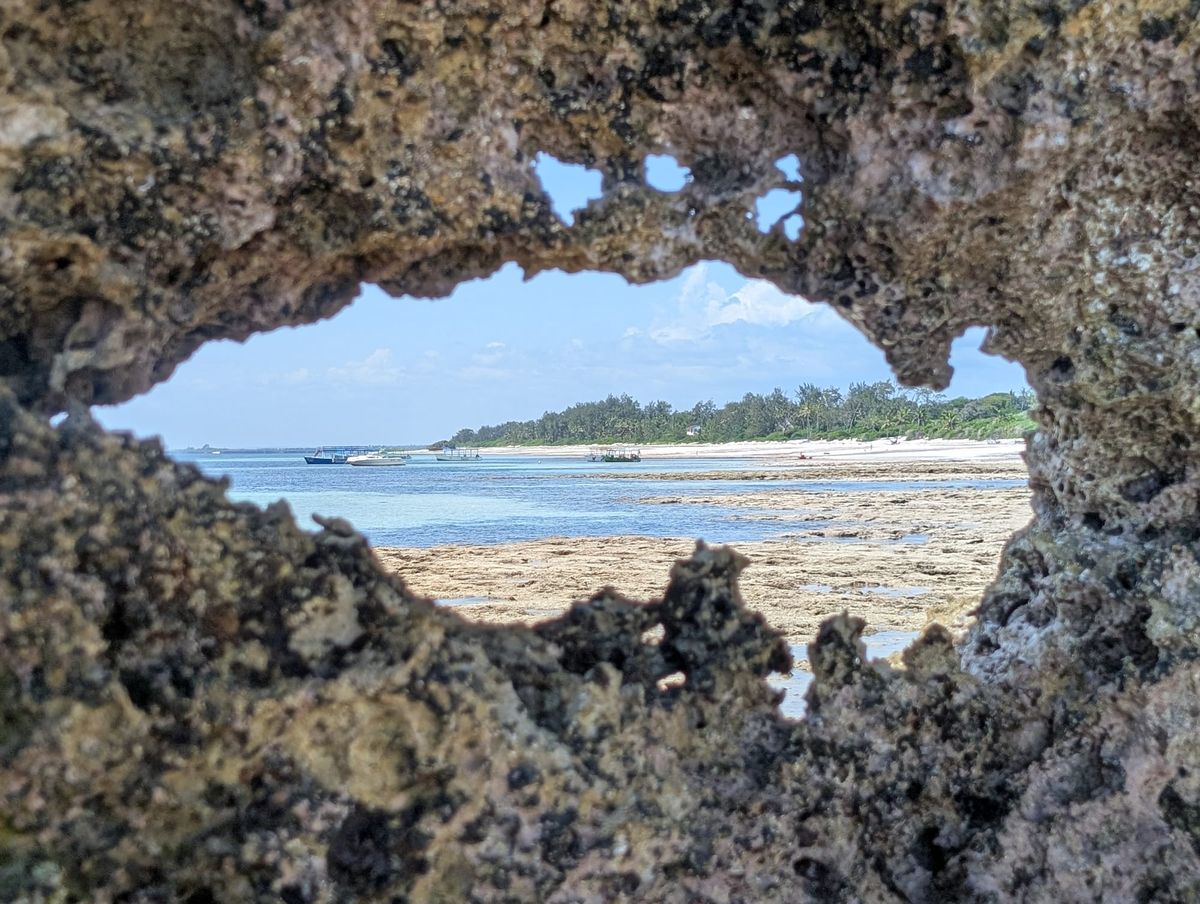
That is what makes the withdrawal sad rather than clean. Watamu remains the most beautiful stretch of beach I know from my travels, even after the coral reefs have been stripped of their fish, shells and live coral. The light, the sand, the reef line, the colour of the Indian Ocean, the seven islands and more are still extraordinary. It is not a place one can dismiss as ugly, degraded or false. Its beauty survives, but in a thinned-out form, with violence close to the surface and poverty starting 100 metres from the sand.
That is the contradiction. Watamu can still look like paradise, especially to the late-arriving foreigner, while also being a place where paradise has been damaged, monetised and made dangerous. It attracts dreams, and some of those dreams arrive carrying money, loneliness, vanity, appetite and ego. It has been so for decades, and the locals have long since adapted. Some have perfected their traps. It is worth remembering that as you arrive in a little piece of heaven.